

CF1902D.Robot Queries
普及+/提高
通过率:0%
时间限制:2.00s
内存限制:256MB


AC君温馨提醒
该题目为【codeforces】题库的题目,您提交的代码将被提交至codeforces进行远程评测,并由ACGO抓取测评结果后进行展示。由于远程测评的测评机由其他平台提供,我们无法保证该服务的稳定性,若提交后无反应,请等待一段时间后再进行重试。
题目描述
There is an infinite 2-dimensional grid. Initially, a robot stands in the point (0,0). The robot can execute four commands:
- U — move from point (x,y) to (x,y+1);
- D — move from point (x,y) to (x,y−1);
- L — move from point (x,y) to (x−1,y);
- R — move from point (x,y) to (x+1,y).
You are given a sequence of commands s of length n. Your task is to answer q independent queries: given four integers x, y, l and r; determine whether the robot visits the point (x,y), while executing a sequence s, but the substring from l to r is reversed (i. e. the robot performs commands in order s1s2s3…sl−1srsr−1sr−2…slsr+1sr+2…sn).
存在一个无限大的二维网格。初始时,机器人位于点 (0,0)。机器人可以执行以下四种指令:
- U — 从点 (x,y) 移动到 (x,y+1);
- D — 从点 (x,y) 移动到 (x,y−1);
- L — 从点 (x,y) 移动到 (x−1,y);
- R — 从点 (x,y) 移动到 (x+1,y)。
给定一个长度为 n 的指令序列 s。你需要回答 q 个相互独立的询问:每次询问给出四个整数 x、y、l 和 r;判断机器人在执行序列 s 的过程中(但将子串 s[l..r] 反转)是否会访问点 (x,y)(即机器人执行的指令序列为 s1s2s3…sl−1srsr−1sr−2…slsr+1sr+2…sn)。
输入格式
The first line contains two integers n and q (1≤n,q≤2⋅105) — the length of the command sequence and the number of queries, respectively.
The second line contains a string s of length n, consisting of characters U, D, L and/or R.
Then q lines follow, the i-th of them contains four integers xi, yi, li and ri (−n≤xi,yi≤n; 1≤l≤r≤n) describing the i-th query.
第一行包含两个整数 n 和 q(1≤n,q≤2⋅105),分别表示指令序列的长度和查询次数。
第二行包含一个长度为 n 的字符串 s,由字符 U、D、L 和/或 R 组成。
接下来是 q 行,其中第 i 行包含四个整数 xi、yi、li 和 ri(−n≤xi,yi≤n;1≤l≤r≤n),描述第 i 个查询。
输出格式
For each query, print YES if the robot visits the point (x,y), while executing a sequence s, but the substring from l to r is reversed; otherwise print NO.
对于每个查询,如果机器人在执行序列 s 时访问了点 (x,y),但子串 s[l..r] 被反转,则输出 YES;否则输出 NO。
输入输出样例
输入#1
8 3
RDLLUURU
-1 2 1 7
0 0 3 4
0 1 7 8
输出#1
YES
YES
NO
输入#2
4 2
RLDU
0 0 2 2
-1 -1 2 3
输出#2
YES
NO
输入#3
10 6
DLUDLRULLD
-1 0 1 10
-1 -2 2 5
-4 -2 6 10
-1 0 3 9
0 1 4 7
-3 -1 5 8
输出#3
YES
YES
YES
NO
YES
YES
说明/提示
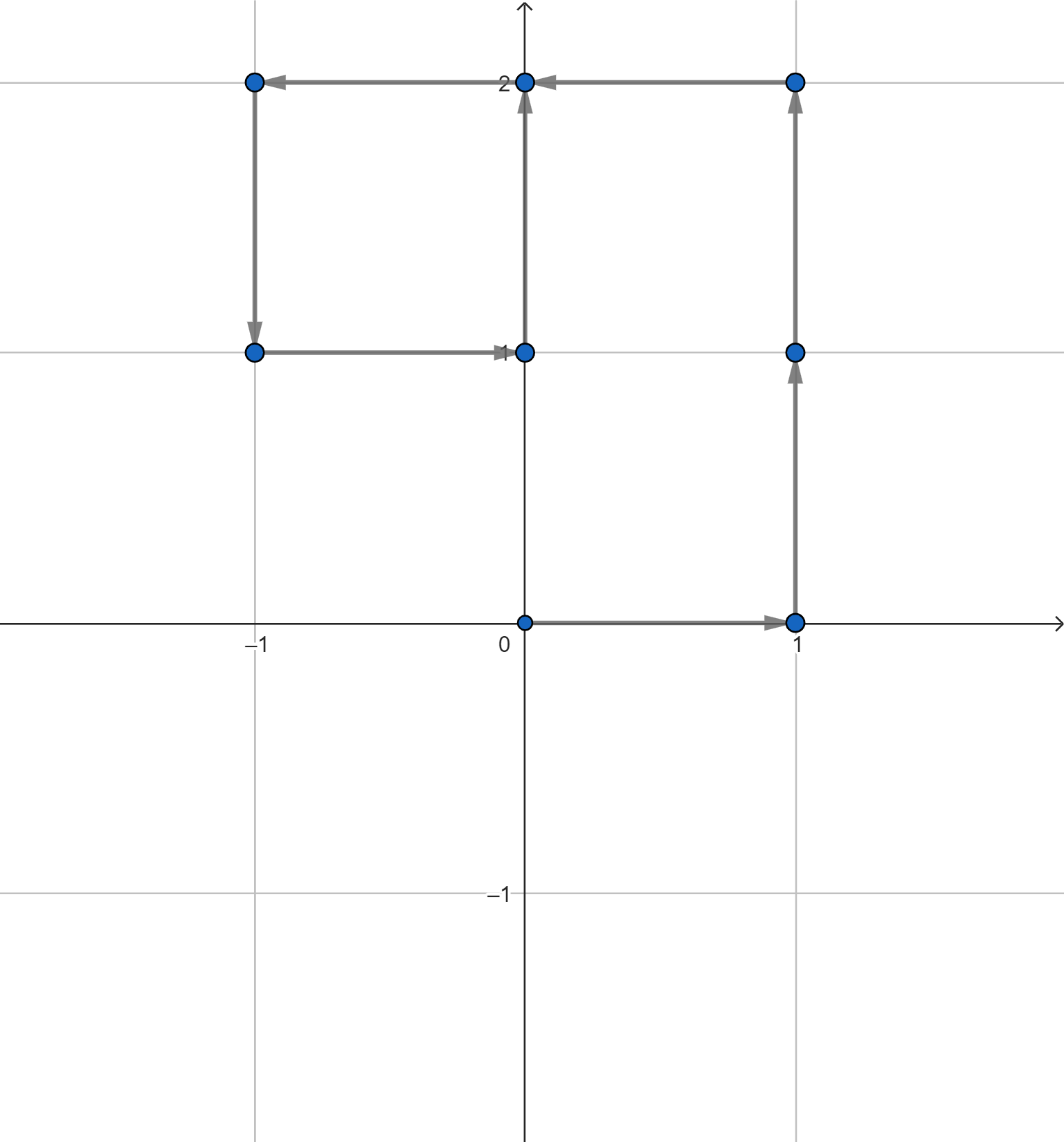
In the first query of the first sample, the path of the robot looks as follows:
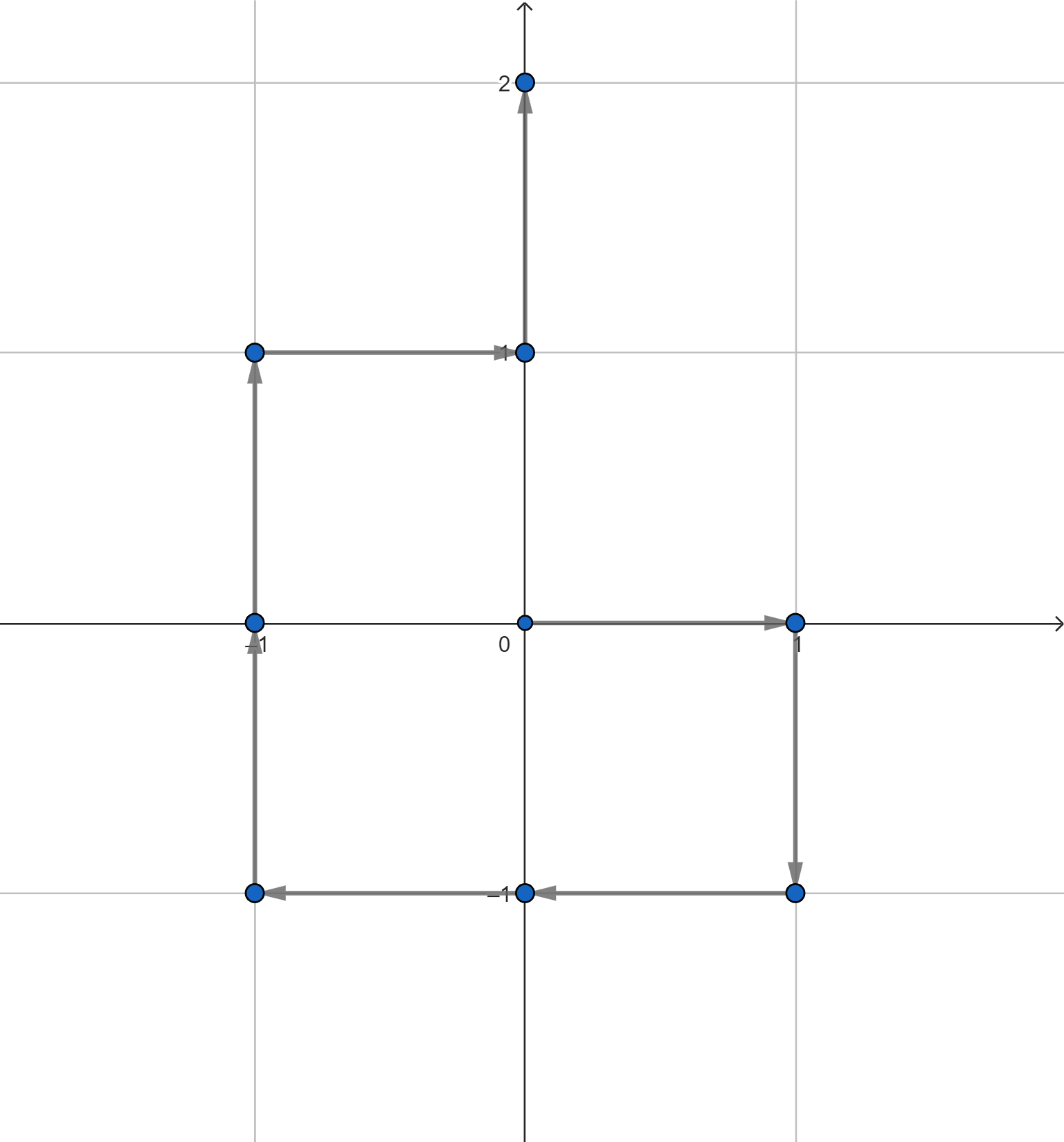
In the second query of the first sample, the path of the robot looks as follows:
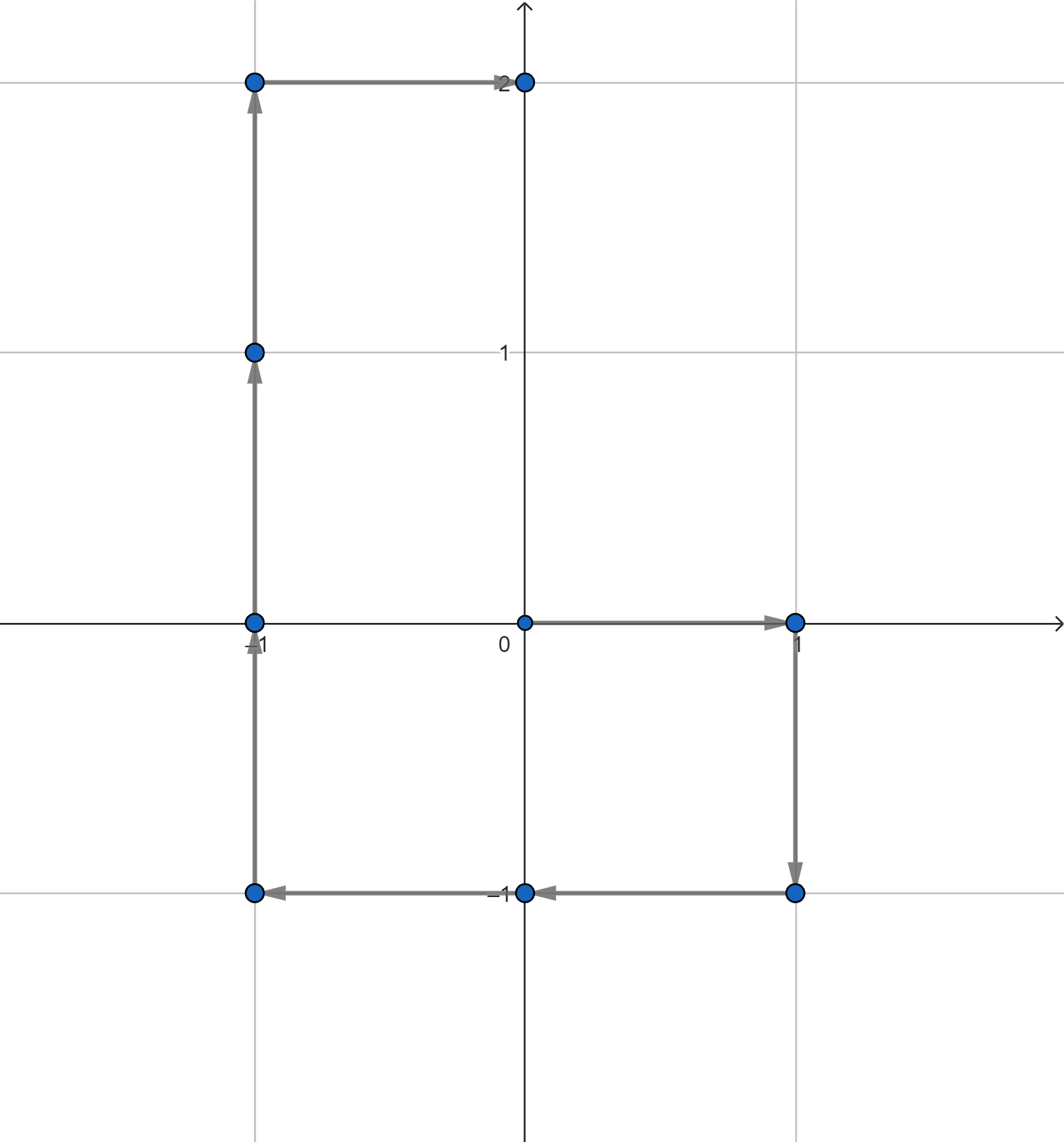
In the third query of the first sample, the path of the robot looks as follows:
在第一个样例的第一个查询中,机器人的路径如下所示:
在第一个样例的第二个查询中,机器人的路径如下所示:
在第一个样例的第三个查询中,机器人的路径如下所示:
输入解题思路,AI测评打分。不知道怎么写?