

CF1173B.Nauuo and Chess
普及-
通过率:0%
时间限制:1.00s
内存限制:256MB


AC君温馨提醒
该题目为【codeforces】题库的题目,您提交的代码将被提交至codeforces进行远程评测,并由ACGO抓取测评结果后进行展示。由于远程测评的测评机由其他平台提供,我们无法保证该服务的稳定性,若提交后无反应,请等待一段时间后再进行重试。
题目描述
Nauuo is a girl who loves playing chess.
One day she invented a game by herself which needs n chess pieces to play on a m×m chessboard. The rows and columns are numbered from 1 to m. We denote a cell on the intersection of the r-th row and c-th column as (r,c).
The game's goal is to place n chess pieces numbered from 1 to n on the chessboard, the i-th piece lies on (ri,ci), while the following rule is satisfied: for all pairs of pieces i and j, ∣ri−rj∣+∣ci−cj∣≥∣i−j∣. Here ∣x∣ means the absolute value of x.
However, Nauuo discovered that sometimes she couldn't find a solution because the chessboard was too small.
She wants to find the smallest chessboard on which she can put n pieces according to the rules.
She also wonders how to place the pieces on such a chessboard. Can you help her?
Nauuo 是一位热爱下棋的女孩。
一天,她自己发明了一个游戏,需要 n 枚棋子在 m×m 的棋盘上进行。棋盘的行与列均从 1 编号至 m。我们将第 r 行与第 c 列相交的格子记为 (r,c)。
该游戏的目标是将编号为 1 至 n 的 n 枚棋子放置在棋盘上,其中第 i 枚棋子位于 (ri,ci),且满足如下规则:对任意两枚棋子 i 和 j,均有 ∣ri−rj∣+∣ci−cj∣≥∣i−j∣。此处 ∣x∣ 表示 x 的绝对值。
然而,Nauuo 发现有时她无法找到满足条件的摆放方案,因为棋盘太小了。
她希望找出能够按上述规则放置 n 枚棋子的最小尺寸棋盘(即最小的 m)。
她还想知道:在这样大小的棋盘上,应如何具体摆放这些棋子?你能帮帮她吗?
输入格式
The only line contains a single integer n (1≤n≤1000) — the number of chess pieces for the game.
唯一的一行包含一个整数 n(1≤n≤1000)——游戏所用的棋子数量。
输出格式
The first line contains a single integer — the minimum value of m, where m is the length of sides of the suitable chessboard.
The i-th of the next n lines contains two integers ri and ci (1≤ri,ci≤m) — the coordinates of the i-th chess piece.
If there are multiple answers, print any.
第一行包含一个整数——满足条件的棋盘边长 m 的最小值。
接下来的 n 行中,第 i 行包含两个整数 ri 和 ci(1≤ri,ci≤m)——表示第 i 个棋子的坐标。
若存在多个答案,输出任意一个即可。
输入输出样例
输入#1
2
输出#1
2
1 1
1 2
输入#2
4
输出#2
3
1 1
1 3
3 1
3 3
说明/提示
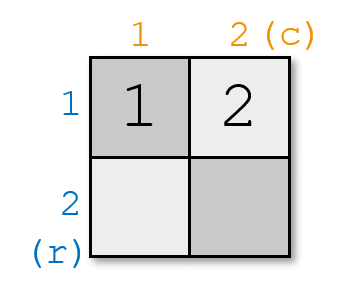
In the first example, you can't place the two pieces on a 1×1 chessboard without breaking the rule. But you can place two pieces on a 2×2 chessboard like this:
In the second example, you can't place four pieces on a 2×2 chessboard without breaking the rule. For example, if you place the pieces like this:
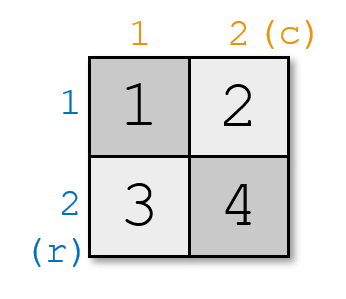
then ∣r1−r3∣+∣c1−c3∣=∣1−2∣+∣1−1∣=1, ∣1−3∣=2, 1<2; and ∣r1−r4∣+∣c1−c4∣=∣1−2∣+∣1−2∣=2, ∣1−4∣=3, 2<3. It doesn't satisfy the rule.
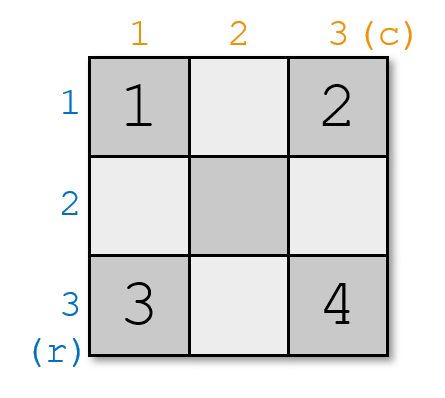
However, on a 3×3 chessboard, you can place four pieces like this:
在第一个例子中,你无法在 1×1 的棋盘上放置两个棋子而不违反规则。但你可以在 2×2 的棋盘上这样放置两个棋子:
在第二个例子中,你无法在 2×2 的棋盘上放置四个棋子而不违反规则。例如,若你按如下方式放置棋子:
则有 ∣r1−r3∣+∣c1−c3∣=∣1−2∣+∣1−1∣=1,而 ∣1−3∣=2,满足 1<2;且 ∣r1−r4∣+∣c1−c4∣=∣1−2∣+∣1−2∣=2,而 ∣1−4∣=3,满足 2<3。这不满足规则。
然而,在 3×3 的棋盘上,你可以这样放置四个棋子:
输入解题思路,AI测评打分。不知道怎么写?